Friday, December 20, 2013

Obama says 'we screwed it up' on health law debut


(Reuters) - President Barack Obama on Friday defended his administration's decision to delay for some people the requirement to buy medical insurance under his healthcare law, but acknowledged that the botched roll out of the policy was his biggest mistake of 2013.

"Since I'm in charge, obviously we screwed it up," Obama said at his year-end news conference.

Officials said late on Thursday that people whose insurance plans were canceled because of new standards under the law may claim a "hardship exemption" to the requirement that all Americans must have coverage by March 31, or face a penalty.

The sudden change was announced four days before the federal government's deadline to sign up for coverage that starts on January 1 under the Patient Protection and Affordable Care Act, which was passed in 2010 and set up online exchanges, or marketplaces, for enrollment.

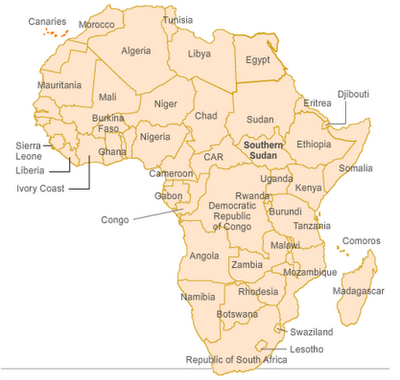
South Sudan: violence plagues world's youngest country

       The role of religion in the state and access to limited resources were main factors in the south's demand for self-determination. Ethnic tension between the Luo-Neur and Murle groups over access to limited resources in the Jonglei State, has been a main source of violence within the country. The two groups have easy access to weapons and are unable to be suppressed by the unstable government's army; an estimated 140,000 people have been displaced as a result of the violence. Rebel militia's also have a strong presence within the country and claim to be fighting against the regime of the SPLM (the Sudan People's Liberation Movement/Army) the current ruling party of South Sudan, headed by Salva Kiir.
      The autonomy of Southern Sudan resulted after a six year Comprehensive Peace Agreement in which the NCP (National Congress Party and ruling party of Sudan) compromised with the SPLM to attempt democratic transformation between the groups and provide Southern Sudan with larger autonomy within a unified Sudan. The elections between the parties resulted in fraud and further divided the country. Southern Sudan voted for it's independence and seceded from Sudan on July 9th, 2011.Famine has resulted in border refugee camps and food security is at a crisis level for the inhabitants of the country, access to aid is also limited because the security of the country is so unstable.
      In July the South Sudan President Salva Kiir (of the Dinka ethnic group) and head of the SPLM fired Vice President Riek Machar Terry (of the Luo-Nuer group) and the rest of his cabinet members. The decision has been criticized as politically motivated and the former Vice President has announced his desire to run for Presidency in 2015. On Friday up to or exceeding 50 members of the Dinka ethnic group were attacked and killed in the capital of Juba in the Jonglei State. The country lies at the "precipice" of civil war. Foreign Minister Barnaba Marial Benjamin of South Sudan suggested that the focus on racial and ethnic tensions are meant to distract from Machar's attempt to overthrow Kiir. Stabilizing the country to reduce violence is the primary concern, yet the political motivations of the governing parties favor the instability to further their political goals. Although those who perpetrated the attack were loyal to former Vice President Machar, he denies the attacks are a coup to kill Kiir.


 Help the crisis in Sudan:       http://www.enoughproject.org/take_action


Learn More:
http://bit.ly/1fN8Bx7
http://aje.me/1c8ZoPa
http://aje.me/18E0Z05
Photos:
http://bit.ly/19Dtxp9
http://bit.ly/1jrohv7


Morality & Mirror Neurons

Morality and Mirror Neurons


Morality is an intuitive response of people to our empathetic sense that stems from mirror neurons, which is a mimicking property that people have to stimulate learning. This consequentially creates the awareness of suffering in other human beings and a natural desire to avoid creating this feeling in other's lives similar to our effort of avoidance of these feelings upon our own life. Evil would be anything that deviates from this awareness of the suffering upon others that our actions creates. Throughout human history, every culture has had a moral repulsion to cruelty, at least committed upon those they could accept in their moral sphere, due to lack of learning/interaction from people outside one's tribe, community, nation, culture. Now this is why we see humanity pushing toward a common understanding and a universal moral equivalency, because of the ability of our brains to look at a human being from another, culture, religion and race and identify with a part of their being and take from them and learn a piece of knowledge and develop a pattern of empathy that considers all people. This ability to see past group pride and take from all walks of life will destroy the separatism that is religion, nationalism and culture. Morality is the necessary higher understanding of another human beings emotions through our amazing mirror neural processes. To learn more about mirror neurons watch this fascinating video below.


 -Steve Moss

Science of Lucid Dreaming (w/ Video)

The Science of Lucid Dreaming 

                                  (Video Below)


Lucid dreaming is a phenomenon where you are aware of the fact you are dreaming and thus have a certain level of control over your dream. Certain techniques can enhance your lucid dreaming experience and it seems to be a skill that can be practiced and mastered. Watch this video to learn how you can lucid dream, even while awake!


Micro Renting: Quality low income housing or just more gentrification?

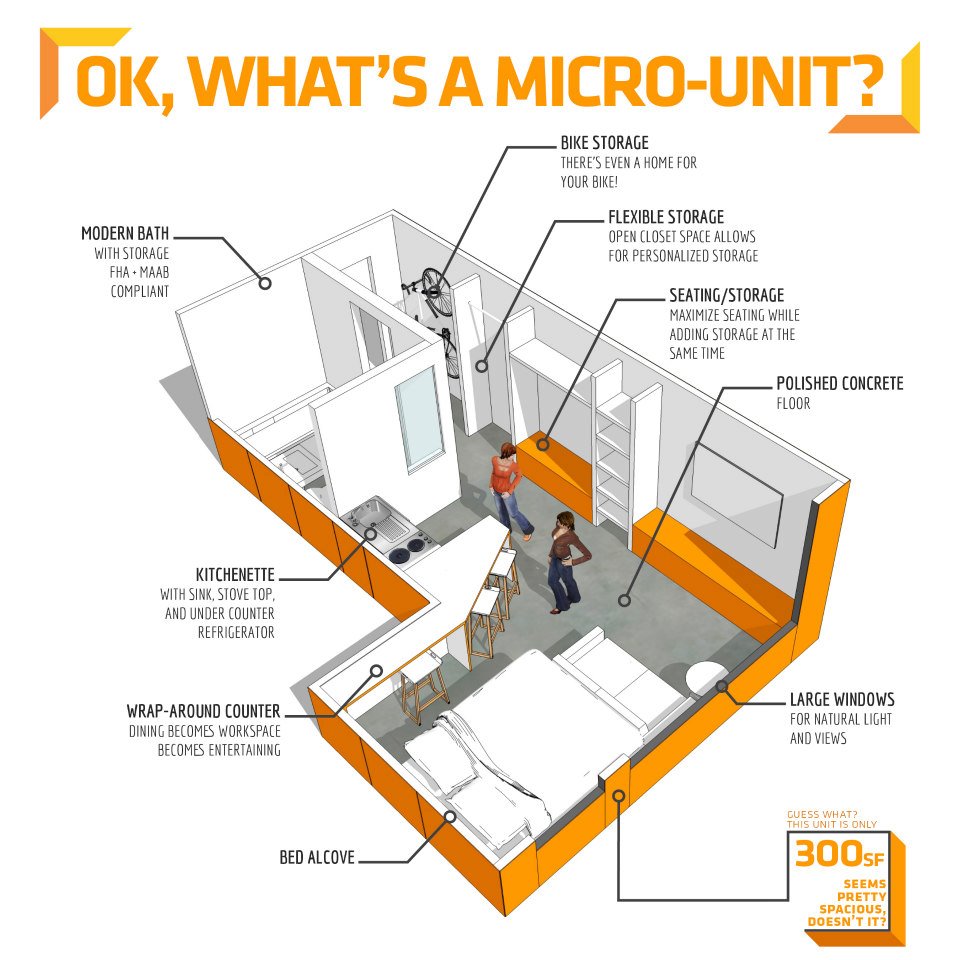
      Twenty to thirty year old's are malleable, spending their energy discovering their talents and making connections laying out the foundations of their lives. Cities draw an individual willing to adapt to get ahead, and live their life they way they desire, they draw so many of these individuals that they become overcrowded and expensive. The latest trend to combat the cost of living are these "micro-units" which often have between 300 to 500 square feet and run from $500-600 per month. Often these units are within buildings which include communal amenities to offset the lack of personal living space. Customers drawn to these spaces typically spend a small amount of time within the home, they feel that this is a great alternative to save money and maintain their lifestyle. While $1,500 for a nearly larger one-bedroom is not a very attractive option either, this newest trend may just be another factor to contribute to the already prevalent overcrowding issue in large cities. Large buildings packed with 60+ micro-units can lead to tenement conditions, when landlord's looking to maximize profitability allow their buildings to fall into disrepair.
      Others speak to the effectiveness of cutting housing costs and the need for low income housing. In many cities the poor are being pushed out due to these wealthy young professionals who migrate to the area for it's cultural benefits, but ultimately rise the cost of living as they draw businesses which target their market. Many low income families who are in need in these areas are those with children, are such low square footage homes really going to provide for children? Is the rise of micro-renting just furthering the agenda of gentrification? Low income housing is a priority for cities. People who need the most help with the cost of living are not young professionals they are the hard working lower to middle class families. Ideas would be more beneficial if they were centered around providing for the needs of those who are struggling most rather than attempting to draw more young people to profit from.


 Sources:
http://bit.ly/1bgOimT
http://on.wsj.com/1l1aGpT
http://bit.ly/18DTA0O